Most kids meet Cinderella through Disney. It’s a great read aloud for bedtime or a quiet afternoon, and the version below sticks close to what your child already knows.
But here’s something most retellings skip. The Cinderella story didn’t start in France or Germany. It started in China. The version most kids know, it comes from Charles Perrault’s 1697 French telling. The oldest written Cinderella, though, is the Chinese tale of Yeh-Shen, recorded around 850 CE, almost 850 years earlier. Folklorists have now collected over 500 Cinderella versions from around the world.
Read the story together first. Then, if your child is in 2nd grade or older, scroll down to the “Cinderella around the world” section. It’s a good talking point and lines up with Common Core comparison standards.
Cinderalla

Cinderella’s story starts in a remote village. A long time back, there lived an unhappy young girl. She was unhappy because her mother had died and her father had married another woman. Her stepmother had two daughters of her own, and she didn’t like Cinderella at all.
All the good things and care went to her own daughters. Even dresses, shoes, and delicious food were only for the stepmother’s two daughters. The poor sad girl had to work hard all day, and in the evening she was allowed to sit for a while near the cinders. That’s how she got her nickname, Cinderella. She used to spend long hours all alone talking to her cat. The cat would cheer her up.
Even in rags, with a dusty gray face from the cinders, Cinderella looked like a beautiful girl. Her stepsisters, no matter how splendid and elegant their clothes, were still clumsy and unkind.

One day a ball was to be held at Court and the stepsisters were getting ready to go to it and she was asked to stay at home and clean the dishes, wash old clothes and scrub the floors and make a bed for her stepsisters.

Suddenly something amazing happened. In the kitchen, where Cinderella was sitting, a Fairy appeared in a flash of light. “Don’t be alarmed, beautiful girl,” said the fairy. “The wind told me about your sadness. I know you would love to go to the ball.
“How can I, dressed in rags?” Cinderella asked. “The servants will turn me away!” The fairy waved her magic wand, and Cinderella was turned into a beautiful princess wearing the most beautiful dress.
“Now that we have settled the matter of the dress,” said the fairy, “we’ll need to get you a coach. A real lady would never go to a ball on foot!”
Then Fairy ordered – “Get me a pumpkin!”
“Sure”, said Cinderella, rushing away. Then the fairy turned to the cat and asked her “You, bring me seven mice!”
Soon a fine pumpkin was provided to Fairy and the cat came with seven mice he had caught in the cellar.
“Good!” exclaimed the fairy. With a flick of her magic stick, The pumpkin turned into a sparkling coach and the mice became six white horses, while the seventh mouse turned into a coachman, in a smart uniform. Beautiful Girl could not believe her eyes.
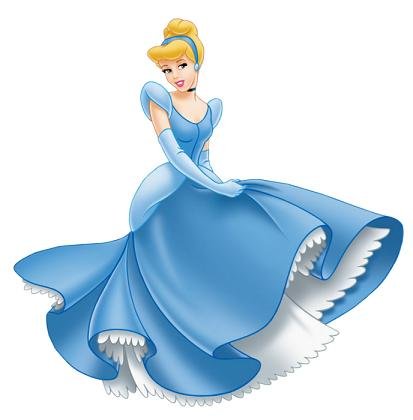
“I shall present you at Court. But don’t forget that you have to leave the ball at midnight and come home on time. For that is when the spell ends. Your coach will turn back into a pumpkin, the horses will become mice again and the coachman will turn back into a mouse, and you will be dressed again in rags. Have you understood ?” Cinderella smiled and said,”Yes, I understand!”
When Cinderella entered the ballroom at the palace everyone stopped in mid-sentence to admire her elegance, her beauty, and grace.
“Who is that Beautiful Princess?” people asked each other. The two stepsisters also wondered who that girl is.
When the prince set eyes on Cinderella, he was struck by her beauty. Walking over to her, he bowed deeply and asked her to dance. And to the great disappointment of all the young ladies, he danced with Cinderella all evening.

Cinderella had a wonderful time at the ball. But, all of a sudden, she heard the sound of a clock: the first stroke of midnight! She remembered what the fairy had said, and without a word of goodbye ran down the steps. As she ran she lost one of her slippers, but not for a moment did she dream of stopping to pick it up! If the last stroke of midnight were to sound, what a disaster that would be! Out she fled and vanished into the night.
The Prince, who was now madly in love with her, picked up her slipper and said to his ministers,

“Go and search everywhere for the girl whose foot this slipper fits. I will never be content until I find her!” So the ministers tried the slipper on the foot of every girl, and on Cinderella’s foot as well. Surprise! The slipper fit perfectly.
“That awful untidy girl simply cannot have been at the ball,” snapped the stepmother. “Tell the Prince he ought to marry one of my two daughters! Can’t you see how ugly Cinderella is? Can’t you see?”
Suddenly she broke off, for the fairy had appeared.

Fairy raised her magic stick. In a flash, Cinderella appeared in a Beautiful dress, shining like a star.
Her stepmother and stepsisters were surprised and could not believe their eyes and the ministers said,
“Come with us, Beautiful princess! The Prince awaits to present you with his engagement ring!”
So Cinderella joyfully went with them and lived happily ever after with her Prince.
💡 Takeaway: Cinderella is wonderful on its own as a bedtime read aloud, and even better when you tell your child it’s just one of more than 500 versions told in different languages and cultures for over a thousand years.
🌍 Cinderella Around the World
If your child loved this story, here’s something fun to share. Cinderella is one of the most-retold tales in human history. Different cultures have their own versions. Reading two or three of them side by side is a real eye-opener for kids, and it’s exactly the kind of comparison Common Core asks 2nd graders to do.
A few worth knowing:
- Yeh-Shen (China, around 850 CE). The oldest written Cinderella story. Yeh-Shen is helped by a magical fish, not a fairy godmother, and her slipper is made of gold.
- Rhodopis (Egypt, ancient). A Greek-Egyptian story where an eagle carries off a girl’s sandal and drops it in the Pharaoh’s lap. He searches the kingdom for its owner.
- Aschenputtel (Germany, Brothers Grimm, 1812). Darker than the French one. No fairy godmother. A magical hazel tree growing on her mother’s grave gives Cinderella her gowns.
- Cendrillon (France, Charles Perrault, 1697). The version this page tells. Perrault gave us the pumpkin, the fairy godmother, and the glass slipper.
Words to Talk About
Reading aloud is a good moment to slow down on tricky words. Three from this story worth pausing on:
- Cinders. The bits of half-burned wood and ash left in a fireplace after the fire dies down. That’s how Cinderella got her name.
- Coach. Here it means a fancy horse-drawn carriage, not a sports coach. Worth flagging because kids almost always know the other meaning first.
- Ball. Same thing. In this story a ball is a big formal dance party at a palace, not something you throw or kick.
Questions to Ask After Reading
A few open-ended questions for after the story:
- Why do you think the fairy chose to help Cinderella and not the stepsisters?
- What would have happened if Cinderella had stayed past midnight?
- The story says Cinderella was beautiful even covered in ashes, and the stepsisters were ugly even in fine clothes. What does that tell us about what “beautiful” really means in this story?
- If you had a fairy godmother for one wish, what would you ask for?
There are no wrong answers. The point is the conversation.
More Fairy Tales to Read Aloud
If your child enjoyed Cinderella, try these next:
Curriculum Alignment: Aligned with Common Core State Standards: RL.K.5 (recognize common types of texts, including fairy tales), RL.2.9 (compare and contrast two or more versions of the same story by different authors or from different cultures). Suitable for Preschool Read-Aloud, Kindergarten Read-Aloud, Elementary Reading, and Homeschool.

Madhu is the founder and lead author of SmallKidsHomework.com, a free learning site she started in 2009. She writes the poems, fairy tales, folktales, coloring pages, and kindergarten worksheets here, many tagged to Common Core standards. She tests printables with real children and keeps everything free, with no signup needed.